Home Mandir and Pooja Unit Vastu Guide in Nepal: Direction, Materials and Shikhara Designs
By Ashwi Traditional Artisans & Vastu Advisors | Updated on 2025-03-10 | 7 min read
Positioning your puja mandir properly invites positive energy, peace, and auspicious vibrations into your home. Here is our architectural and Vastu guide for Nepali families.
Ideal Vastu Directions for Your Home Mandir (Ishan Kona)
According to Vastu Shastra, the North-East (ईशान कोण - Ishan Kona) is the supreme zone for setting up a family mandir. The North-East brings clarity, spiritual serenity, and prosperity because morning solar rays enter from this quadrant.
Alternative Orientations:
East: Excellent second choice. When praying, facing East promotes concentration and vitality.
North: Good for homes where North-East is unavailable; associated with Kubera (wealth).
Directions to Avoid: Never place your mandir in the South or South-West corner, directly below a staircase, or adjoining a bathroom wall.
Auspicious Materials: Why Solid Wood Is Enduring
Vastu texts highlight natural solid timber (specifically Teak, Sisau, or Sandalwood) as the purest material for housing deities. Real wood conducts warm sattvic energy and ages gracefully with daily incense and oil lamp rituals.
Avoid purchasing glass-only or cold metal temple structures for residential sanctums. Ensure the timber is seasoned so the carved pillars and arches never warp or crack over decades of family devotion.
Essential Design Elements in a Traditional Nepali Pooja Unit
A thoughtful home mandir balances sacred architecture with practical daily worship needs:
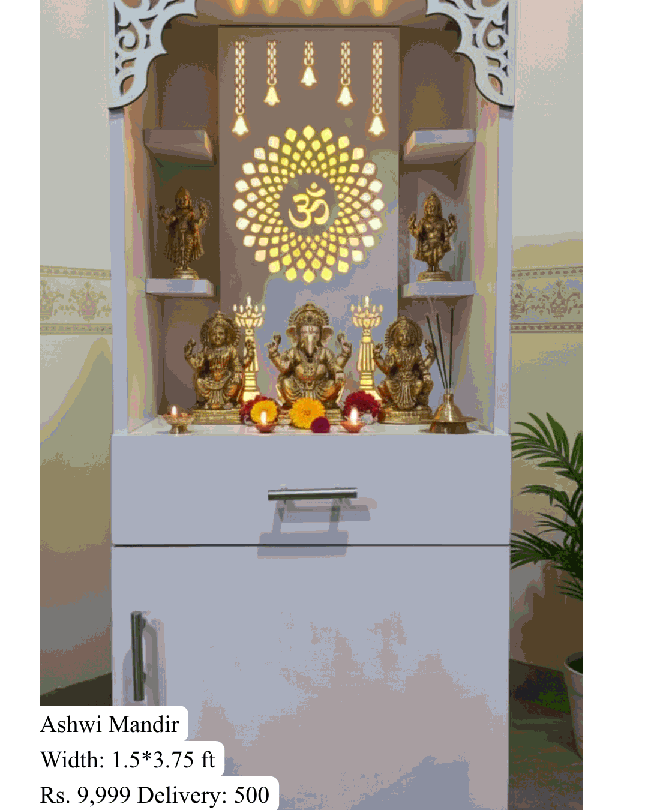
Carved Shikhara & Kalash Dome: Symbolic of the sacred mountain peak, channeling positive vibrations downward into the sanctum.
Diya Extension Tray: A sliding brass or timber tray that pulls out below the sanctum. This provides a dedicated fireproof surface for burning camphor (kapur) and mustard oil butter lamps (diyo) without blackening the ceiling above.
Storage Cabinet for Puja Samagri: Deep lower drawers with quiet sliding channels to keep incense boxes (agarbatti), holy books (Gita, Chandi), brass bells, and cotton wicks organized away from sight.
Elevation Off the Ground: Idols should be placed at chest height so that deities stand at eye level whether the worshipper is seated on a puja aasan mat or standing.
Caring for Carved Wood Around Oil Lamps and Smoke
Daily burning of oil lamps and dhoop can leave oil vapor residues on carved wooden arches over time.
Clean your wooden mandir once a month with a soft cotton cloth lightly dampened with lemon oil or diluted sandalwood water. Avoid harsh synthetic chemical cleaners or abrasive scouring pads that strip the warm lacquer finish.
Frequently Asked Questions
Which wood is most auspicious for a home mandir in Nepal?
Teak (Sagwan) and seasoned Sisau (Sheesham) are the most recommended timbers. Both offer exceptional longevity and carve beautifully into traditional shikhara spires and peacock motifs.
Can the home mandir be mounted on the wall or should it sit on the floor?
Both work well. For smaller apartments, a wall-mounted wooden mandir saves floor space while keeping the deities at eye level. For larger homes, a floor-standing cabinet mandir with storage drawers is ideal.
Does Ashwi Furniture offer custom sizes according to room dimensions?
Yes. Our woodcarvers can adjust the height, width, number of shelves, and drawer layouts according to your exact room measurements and Vastu preferences.
✓ 100% Payment After Delivery: We deliver and assemble across Kathmandu, Lalitpur, and Bhaktapur. Inspect your furniture before paying. For custom sizing or inquiries, call or WhatsApp 9860479751.